Commercial Drywall Risk Awareness · Quality Assurance
The Costliest Drywall Installation Problems Are Not Always the Most Visible
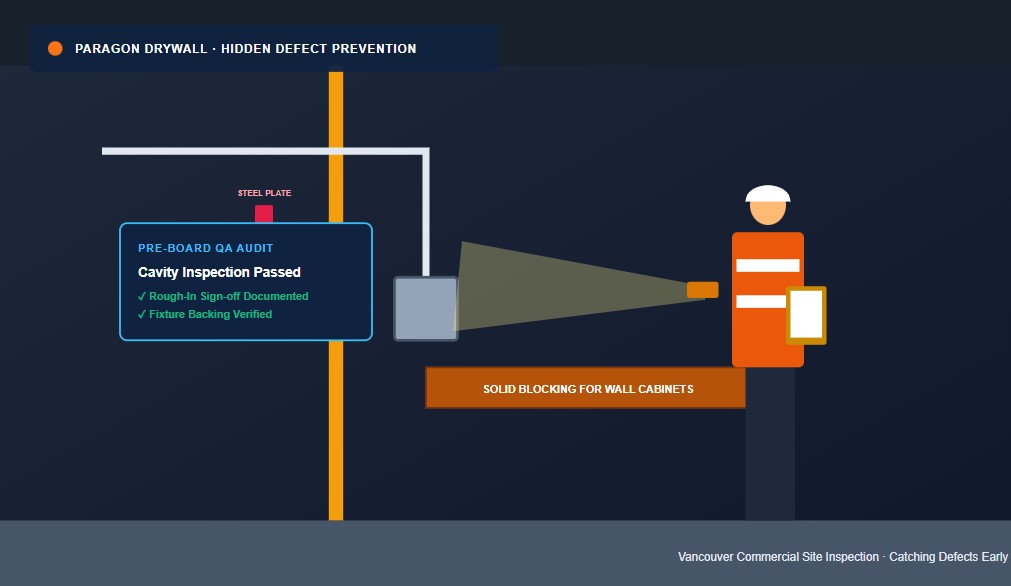
A nail pop or a cracked joint is easy to see and cheap to fix. The problems that blow budgets are behind the paint, inside the wall or buried in the schedule. As a commercial drywall contractor serving Vancouver and the Lower Mainland, we focus our checks on what clients cannot see. This guide explains the six hidden problems that cost the most, and how we catch them before walls close.
Quick Answer
The costliest drywall installation problems are usually hidden: moisture behind boards, fire-rating errors, missing blocking, sound gaps, wrong board or fasteners, and walls closed before inspection. A commercial drywall contractor prevents them with planning, pre-board checks, written sign-offs and photo records.
Why Hidden Drywall Problems Cost More Than Visible Ones
Visible defects can be sanded, patched and repainted in a day. Hidden defects often mean cutting open finished walls, re-inspecting, repainting and disrupting tenants or trades. The cost is not the repair itself but everything that has to be undone to reach it. In Vancouver's wet climate and tightly scheduled projects, that cost multiplies quickly.
Six Hidden Drywall Problems That Cost the Most
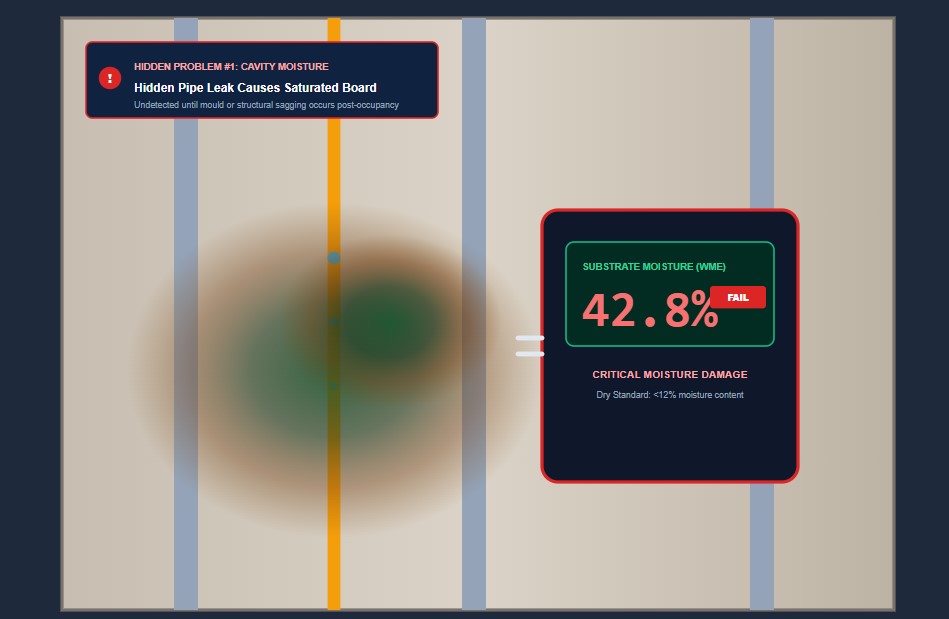
1. Moisture Trapped Behind the Board
Wet boards, slow leaks or high humidity can lead to mould and soft board long before a stain appears. Repairs mean removing finished walls and often other trades' work. We keep boards dry, confirm floors are enclosed and check substrates before boarding.
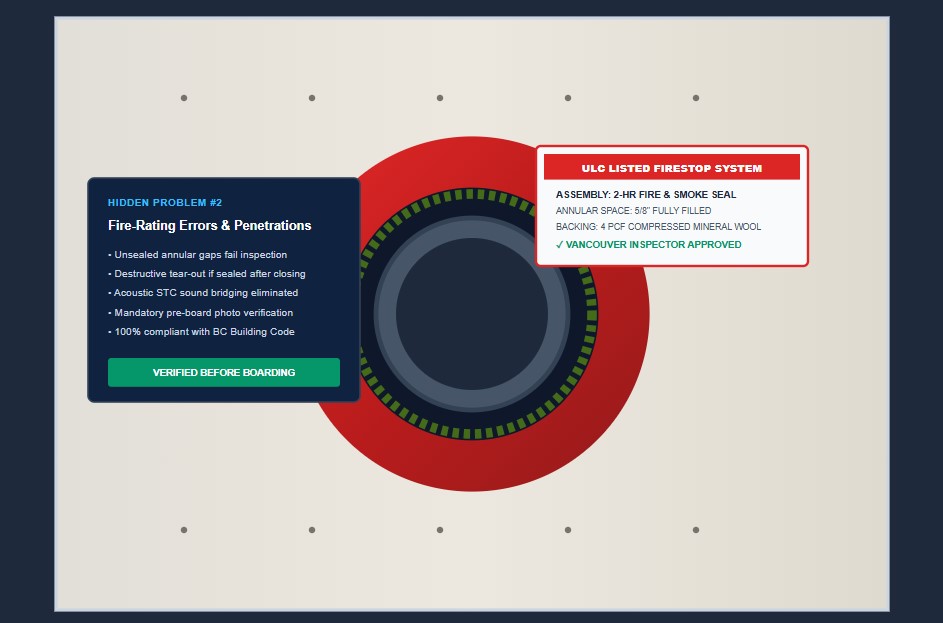
2. Fire-Rating Errors and Unsealed Penetrations
A rated wall built with the wrong layers, or with gaps around pipes and cables, can fail inspection or compromise safety. We identify rated walls on the drawings, build to the listed assembly and coordinate firestop. See BC Building Code requirements for your project.
3. Missing Blocking
Without blocking, cabinets, handrails, TV mounts and fixtures cannot be fastened securely. Adding it later means opening the wall. We confirm blocking locations at the pre-board walk-through, as described in our guide to drywall around electrical and plumbing.
4. Sound Transmission Gaps
Small gaps at board edges, outlets and penetrations let sound travel between suites or offices. Complaints appear after occupancy, when fixes are expensive. We use acoustic sealant and follow the specified assembly.
5. Wrong Board Type or Fasteners
Using standard board where moisture-resistant or fire-rated board is specified, or the wrong screw length or spacing, can cause failures that only appear months later. We check the specification against deliveries before boarding.
6. Walls Closed Before Inspection
The most expensive mistake is boarding before rough-ins and framing are signed off. We do not close walls without written approval, which prevents opening finished work. Read how this fits into commercial drywall project planning.
Visible Problems vs Hidden Problems
| Factor | Visible problems | Hidden problems |
|---|---|---|
| Examples | Nail pops, small cracks, uneven joints | Moisture, rating errors, missing blocking, sound gaps |
| Found when | During finishing or painting | After closing, inspection or occupancy |
| Typical fix | Patch, sand, repaint | Open wall, repair, re-inspect, refinish |
| Impact on schedule | Small | Often large |
| Best prevention | Thin coats, correct fastening | Pre-board checks, sign-offs, records |
How We Catch Hidden Problems Before Walls Close
As an experienced commercial drywall company, our crews follow a 5-step verification process before boarding:
- Review drawings and specifications for rated, acoustic and wet-area walls
- Check delivered materials against the specified board types
- Walk framing and rough-ins with the other trades
- Get written sign-off and photograph each wall before boarding
- Inspect fastening and joints at every stage using Gypsum Association finishing guidelines
Early Warning Signs to Watch For
On any commercial site in Vancouver, watch for these danger signals:
- Missing or incomplete inspection records
- Boards stored wet or directly on the slab
- Rated walls without a clear assembly reference
- Penetrations with no sealing plan
- Pressure to close walls before trades finish
What to Ask Your Commercial Drywall Contractor
Before awarding a project, ask your trade partner:
- How do you confirm walls are ready before closing them?
- How do you check board and fastener types against the specification?
- How do you record hidden work, such as photos or checklists?
- Are your WorkSafeBC clearance and insurance current?
Local Experience You Can Verify
Paragon Drywall Ltd. is a woman-owned commercial drywall subcontractor serving Vancouver, the Lower Mainland and the Fraser Valley for over 15 years, backed by 50+ years of multi-generational trade expertise. We work on commercial and multi-residential drywall projects.
On high-density developments like Station Square in Burnaby and institutional facilities at Alexander College in Vancouver, our pre-board audits caught uncoordinated plumbing penetrations and missing acoustic seals before drywall was installed, preventing an estimated $45,000 in destructive remediation and schedule delay. Our team maintains active WorkSafeBC clearance in good standing, COR safety compliance, and $5,000,000 in commercial general liability insurance. For permit and inspection questions, confirm requirements with your consultant and the local building authority.
Direct Quality Assurance Action
Avoid Costly Surprises With a Commercial Drywall Contractor Who Checks First
Want a commercial drywall contractor who focuses on what you cannot see? Request a commercial drywall quote and share your drawings and timeline. We will review scope, flag hidden risks and give you a clear plan for your Vancouver project.
Frequently Asked Questions
What are the costliest drywall installation problems?
The costliest problems are usually hidden: moisture trapped behind boards, fire-rating errors and unsealed penetrations, missing blocking, sound transmission gaps, wrong board or fasteners, and walls closed before inspection. They often require opening finished walls to repair.
Why are hidden drywall problems more expensive than visible ones?
Visible defects can be patched and repainted in a day. Hidden defects usually mean cutting open finished walls, re-inspecting, repainting and disrupting other trades or tenants, so the cost comes from everything that must be undone to reach the problem.
How can a commercial drywall contractor prevent hidden problems?
By reviewing drawings for rated and wet-area walls, checking materials against the specification, walking framing and rough-ins with other trades, getting written sign-off before boarding and photographing walls before they are closed.
Can drywall moisture problems be found before mould appears?
Often yes. Warning signs include boards stored wet, unenclosed floors, stains, soft board or a musty smell. Checking substrates and keeping materials dry before boarding reduces the risk. Larger mould areas should be assessed by a qualified remediation firm.
Why does blocking matter in drywall installation?
Blocking gives solid fastening points for cabinets, handrails, TV mounts and fixtures. If it is missing, adding it later means opening finished walls. It should be confirmed with other trades before boards go up.
Does Paragon Drywall serve areas outside Vancouver?
Yes. Paragon Drywall Ltd. serves commercial and multi-residential projects across the Lower Mainland and the Fraser Valley, including Burnaby, Surrey, Langley, Richmond, and North Vancouver.