Drywall Repair Guide · Commercial & Residential Best Practices
When Our Drywall Repair Team Uncovers Five More Problems During a Drywall Repair in Vancouver
A simple patch can turn into a bigger job the moment the wall is opened. As a commercial drywall contractor serving Vancouver and the Lower Mainland, we see this on commercial and residential repairs regularly. This guide explains the five hidden problems we find most often, why they appear, and the steps we take to solve them without surprising you.
Quick Answer: How We Handle Hidden Drywall Problems
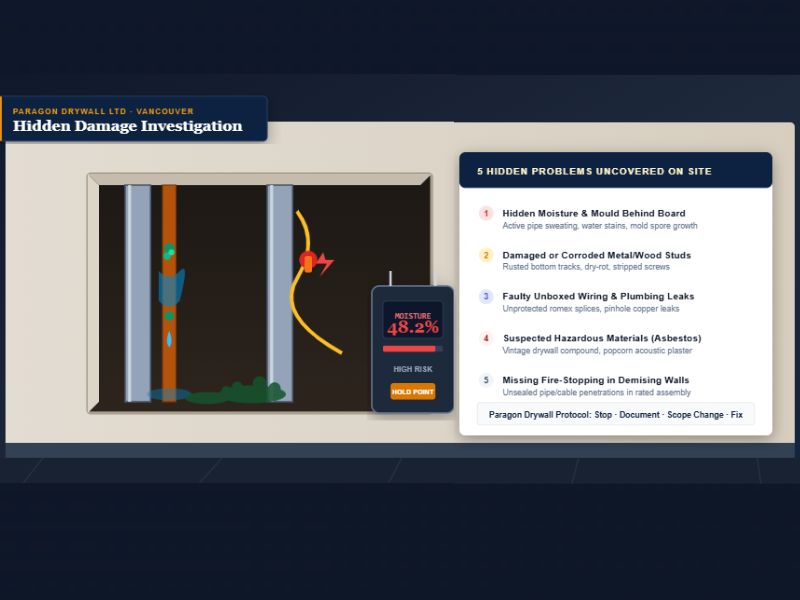
When drywall repair uncovers more problems, an experienced commercial drywall contractor stops work immediately in that area, documents the issue with photos, informs the owner or general contractor, brings in the right trade if needed, agrees to a written scope change, and repairs the root cause before refinishing. The five most common hidden problems are moisture and mould, damaged framing, faulty wiring or plumbing, hazardous materials, and missing fire-stopping.
Why Drywall Repairs Grow Once the Wall Is Open
Drywall hides what happens behind it. A cosmetic stain, hairline crack or soft spot is often merely a symptom, not the root cause. In Vancouver's damp coastal climate, slow condensation leaks and elevated relative humidity accelerate hidden issues behind the gypsum face.
Furthermore, older commercial buildings, retail units, and multi-residential complexes throughout Metro Vancouver carry decades of undocumented alterations—past tenant improvements, uninspected cable runs, and hasty patches that concealed deficiencies. Opening the wall is the only reliable way to inspect the true condition of the framing, mechanical services, and fire barriers.
Our Six-Step Response When New Problems Appear
When our drywall repair team encounters unexpected conditions inside a wall cavity, we follow a strict six-step accountability protocol designed to protect your building and eliminate unexpected budget surprises:
Stop and Secure the Area
We immediately pause work in the affected section and make it safe. If electrical wiring or pressurized plumbing is exposed, we ensure zero further disturbance.
Document the Issue
We photograph, measure, and take moisture meter readings of the problem before touching or removing any additional material. You receive clear photographic evidence.
Notify the Owner or General Contractor
We explain what we found, what caused it, and what it means for the project schedule and structural integrity, avoiding technical jargon so you can make informed decisions.
Bring in the Right Trade
Electricians, plumbers, or certified environmental testing firms handle work outside our scope. We coordinate seamlessly with your existing subtrades or recommend verified local specialists.
Agree on a Written Change
The new scope, material requirements, and transparent pricing are confirmed in writing before extra work continues. You are never presented with an unexplained invoice.
Repair the Cause, Then Refinish
We at Paragon Drywall Ltd. Company fix the source first—stabilizing framing and applying mold-resistant board—then restore the wall to a flawless finish.
The Five Problems We Uncover Most Often
1. Hidden Moisture and Mould
Signs: Persistent water stains, swollen or crumbly board, peeling paint, or a musty odor behind baseboards.
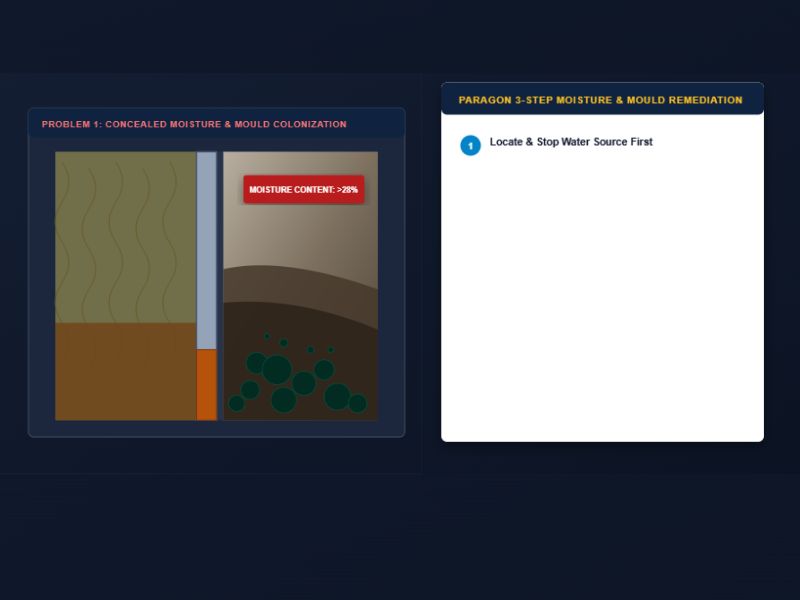
In Metro Vancouver's wet winters, rainwater ingress or pipe sweating creates ideal conditions for microbial growth inside unventilated wall cavities. Our remediation response follows three steps:
- Find and stop the water source: We locate the leaking pipe elbow, roof flashing failure, or perimeter seal breach before undertaking drywall work.
- Remove wet board and dry framing: We cut back damaged gypsum a minimum of 12 inches beyond moisture tide lines, disposing of contaminated material, and dry the framing cavity.
- Replace with moisture-resistant board: We rebuild the cavity using mold-resistant gypsum (green/purple board) and anti-microbial setting compound.
Note: Large mould areas exceeding 10 square feet should be assessed and removed by a qualified remediation firm under WorkSafeBC guidelines before our team rebuilds the drywall.
2. Damaged or Rotted Framing
Signs: Soft wood studs, corroded steel tracks, sagging framing channels, or loose drywall that will not hold drywall screws.
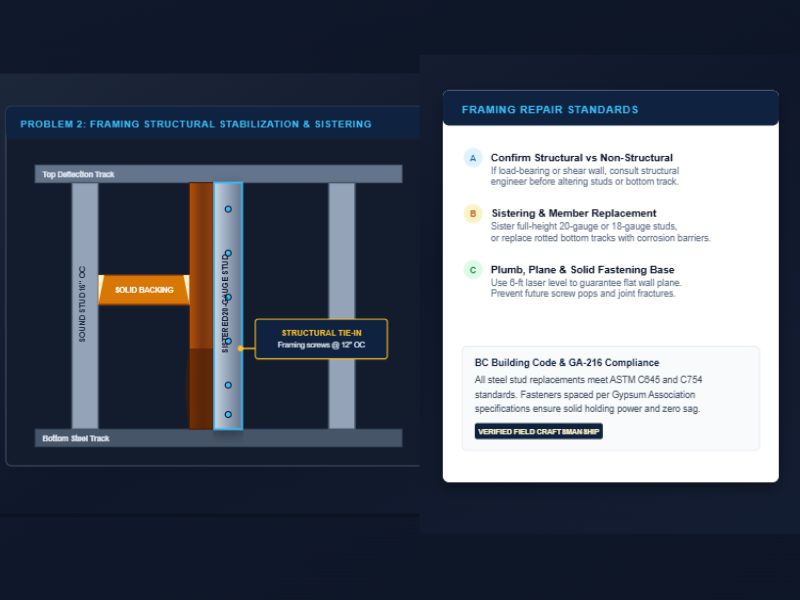
Drywall is only as sound as the framing behind it. When screws pop or walls flex, the underlying studs may have rotted from past water exposure or buckled under stress. Our process:
- Confirm the extent of the damage: We measure stud deflection and determine whether the affected wall is non-load-bearing or part of a structural shear assembly.
- Report to the owner and consultant: If structural framing is compromised, we notify the owner, structural engineer, or general contractor immediately.
- Repair or replace framing: We sister damaged members with heavy-gauge 20-gauge steel studs or replace deteriorated bottom tracks before any new drywall board goes up.
3. Faulty Wiring or Plumbing Behind the Wall
Signs: Unprotected romex wire splices without junction boxes, pinched electrical lines, corroded copper fittings, or active pinhole drips.
Opening walls in older commercial and residential spaces frequently exposes sub-standard historical renovations that violate electrical or plumbing codes:
- Stop work near the hazard: We freeze all drilling, screw driving, and cutting near energized conductors or compromised pipes.
- Call a licensed electrician or plumber: We bring in certified trade professionals to assess, repair, and install required protective nail plates or junction boxes.
- Resume once certified safe: We re-board only once the licensed trade confirms the installation complies with safety standards. For further technical details, read our guide to drywall around electrical and plumbing.
4. Suspected Hazardous Materials
Signs: Vintage plaster, textured ceiling finishes ("popcorn"), vinyl composite tiles, or drywall joint compound installed in buildings constructed prior to 1990.
In British Columbia, older drywall compounds may contain asbestos fibers. Sanding or disturbing asbestos-containing materials (ACM) without containment poses severe health hazards:
- Stop work and seal the area: We immediately halt demolition, isolate the room with polyethylene sheeting, and prevent air movement.
- Review the hazardous materials survey: We request the building's certified Hazardous Materials Assessment (Hazmat) report or coordinate sample testing through an accredited laboratory.
- Continue only after certified abatement: Re-boarding and finishing proceed strictly after qualified abatement professionals perform remediation and provide written clearance per WorkSafeBC regulations.
5. Missing Fire-Stopping or Broken Rated Assemblies
Signs: Unsealed penetrations around electrical conduits, plumbing pipes, or ductwork passing through tenant demising walls; or walls boarded with incorrect single-layer gypsum.
Fire separations protect life safety and are strictly mandated by the BC Building Code and Vancouver Building By-law (VBBL):
- Identify rated walls on the architectural drawings: We cross-reference the site location with building plans to determine the required 1-hour or 2-hour fire-resistance rating.
- Rebuild to the listed ULC assembly: We install 5/8-inch Type X gypsum with specified screw patterns and staggered joints on multi-layer assemblies.
- Seal all penetrations with approved firestop: We pack voids with mineral wool and apply ULC-listed intumescent firestop sealants, scheduling municipal or consultant inspection prior to wall closure.
When We Stop Work and Who We Involve
Knowing when to stop is the true mark of professional trade discipline. Here is how our team triages hidden defects discovered during repairs:
| Discovered Problem | Stop Work Immediately? | Who We Involve |
|---|---|---|
| Moisture and Mould | Yes, in the affected wall section | Licensed plumber, remediation firm if area exceeds 10 sq ft |
| Damaged Framing | Yes, if framing is structural or load-bearing | Property owner, general contractor, structural consultant or engineer |
| Wiring or Plumbing Faults | Yes, in the immediate vicinity of the hazard | Licensed commercial electrician or licensed plumber |
| Suspected Hazardous Materials | Yes, full halt until laboratory cleared | Qualified testing laboratory, certified abatement contractor, WorkSafeBC |
| Missing Fire-Stopping | Not always full halt, but mandatory before closing | General contractor, municipal building inspector, certified firestop installer |
What to Ask Your Commercial Drywall Contractor Before a Repair
Before hiring any subcontractor for repair work in an active facility or residential property, ask these four clarifying questions to protect your budget:
-
How do you handle problems found after the wall is opened?
A reputable contractor has a clear stop-and-document policy rather than blindly boarding over moisture, mould, or code violations. -
Will you give a written change order before extra work starts?
Never accept open-ended verbal authorizations. Legitimate contractors specify labor, materials, and time extensions before proceeding. -
Which trades do you bring in, and who manages them?
Ensure the drywall subcontractor coordinates with qualified electricians, plumbers, and abatement specialists who hold proper trade certifications. -
Are your WorkSafeBC clearance and insurance current?
Verify that the contractor is in good standing with WorkSafeBC and carries comprehensive commercial liability coverage to protect your property.
For more practical insights on diagnosing common wall defects, consult our comprehensive resource on drywall problems and solutions.
Local Experience You Can Verify
Verified Credentials: Paragon Drywall Ltd.
Paragon Drywall Ltd. is a woman-owned commercial drywall subcontractor proudly serving Vancouver, the Lower Mainland, and the Fraser Valley for over 15+ years of continuous operations. We specialize in commercial tenant improvements, multi-family construction, and complex drywall repair and installation projects.
- Proven Landmark Track Record: Delivered expert boarding and finishing on major regional projects, including Station Square Tower in Burnaby and Alexander College in Vancouver.
- Real Repair Case Example: During a recent commercial renovation in Metro Vancouver, our repair crew opened a water-damaged partition and uncovered concealed copper pipe corrosion dripping onto steel stud tracks. Instead of burying the defect, we paused work, documented the leak with photos, facilitated repairs with the building's mechanical subtrade, and provided a transparent written change order to sister the corroded steel framing and install moisture-resistant board—preventing a catastrophic flood.
- Safety & Compliance: Active WorkSafeBC clearance in good standing, $5,000,000 commercial general liability insurance, and strict adherence to the BC Building Code and Gypsum Association standards.
Explore our completed portfolio of multi-residential drywall projects or speak directly with our estimator.
Plan Your Repair With a Commercial Drywall Contractor Who Explains First
Want a commercial drywall contractor who tells you what we find, and what it means, before costs change? Request a quote, send photos of your damaged walls, and let our specialists inspect the substrate and structure before work starts.
Frequently Asked Questions
Why does drywall repair uncover more problems?
Drywall hides what is behind it, so stains, cracks or soft spots are often symptoms of leaks, damaged framing, wiring or plumbing faults, hazardous materials or missing fire-stopping. Opening the wall is the only reliable way to see the true condition.
What should a commercial drywall contractor do when hidden damage is found?
Stop work in the area, document the problem, inform the owner or general contractor, bring in the right trade if needed, agree a written scope change, and repair the cause before refinishing the wall.
Will hidden problems increase the cost of my drywall repair?
They can. A reputable contractor explains what was found, shows photos and gives a written change order before extra work starts. Owners should not be asked to approve unexplained costs.
Is mould behind drywall dangerous?
Mould can affect indoor air quality and indicates a moisture problem that must be fixed. Small areas may be removed with the damaged board, but large areas should be assessed and removed by a qualified remediation firm before drywall is rebuilt.
Can drywall repair continue if asbestos is suspected?
No. Work should stop and the area stay closed until testing or a hazardous materials survey confirms the material. Any required abatement must be done by qualified professionals following WorkSafeBC requirements.
Does Paragon Drywall serve areas outside Vancouver?
Yes. Paragon Drywall Ltd. serves commercial and multi-residential projects across the Lower Mainland and the Fraser Valley.