Commercial Renovation Drywall · Vancouver Pre-Construction Checks
What We Check Before Starting Drywall Installation Work in a Commercial Renovation in Vancouver, and Solutions
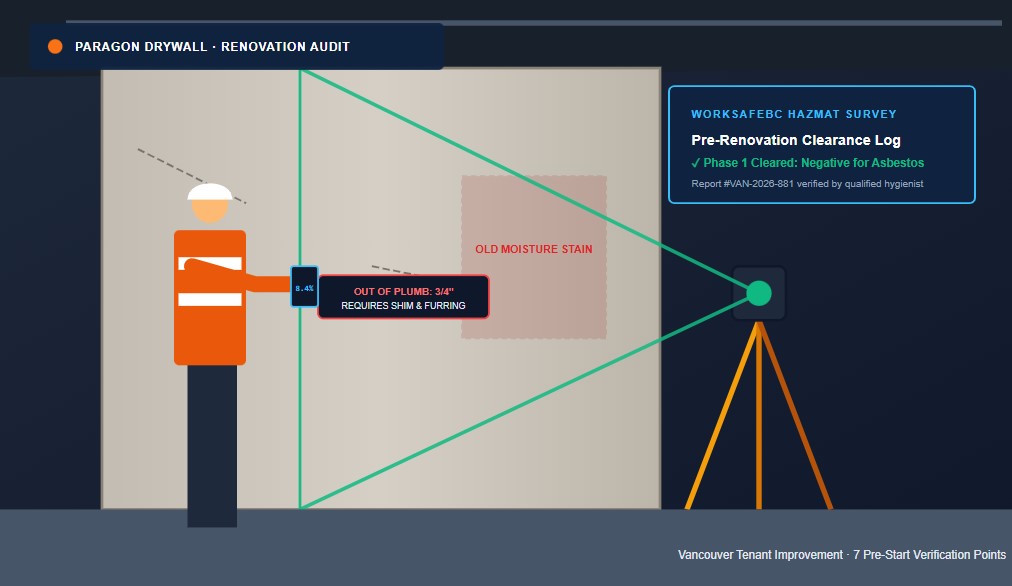
A renovation never matches the drawings exactly. Walls are out of plumb, old materials hide behind finishes, and the building is often still in use. As a commercial drywall contractor in Vancouver, we run a set of checks before any board is hung so surprises are solved on paper, not on site. This guide shows what we check and how we solve the problems we find.
Quick Answer
Before starting drywall in a commercial renovation, a commercial drywall contractor checks for hazardous materials, existing wall condition, moisture, fire-rated assemblies, services and as-built dimensions, building access rules, and dust and noise controls. Each issue gets a written solution before work begins.
Why Renovation Drywall Is Different From New Construction
New buildings give us clean, open framing. Renovations give us unknowns. Older Vancouver buildings may have plaster, layered finishes, uneven slabs, hidden leaks and rated walls that must stay rated. Tenants may be working next door, and landlords often limit hours, elevators and loading zones. Checking first protects the schedule, the budget and the people in the building.
Our Seven Pre-Start Checks for Commercial Renovation Drywall
1. Hazardous Materials Survey
Older buildings can contain asbestos in plaster, joint compound, ceiling texture and flooring. WorkSafeBC rules expect owners to identify hazardous materials before renovation or demolition work. We ask for the survey report and confirm which areas are cleared before our crews start. If material is found, abatement by a qualified firm comes first.
2. Condition of Existing Walls and Substrate
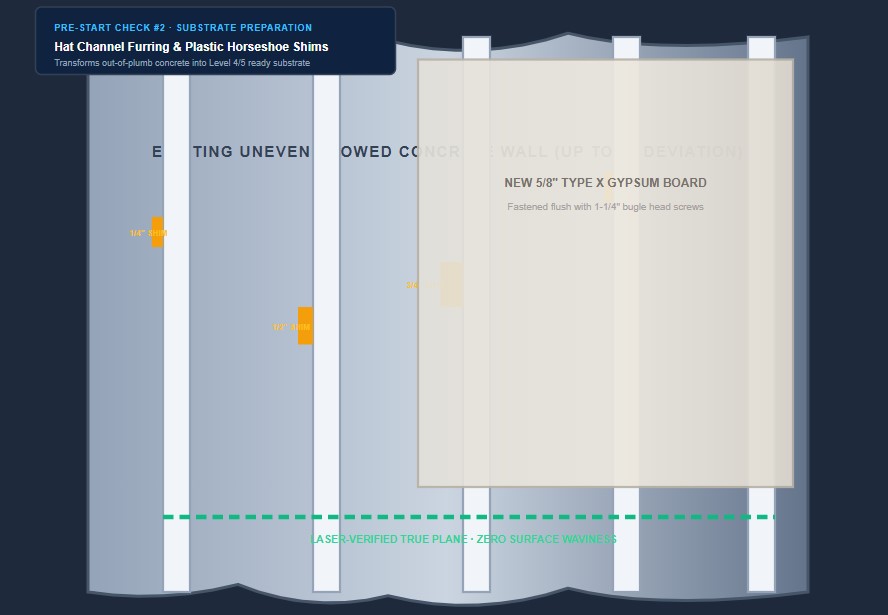
We inspect studs, plaster, masonry and old board for damage, rot and flatness. Bowed or twisted framing is straightened or furred out, and loose or failing surfaces are removed so new drywall is not fastened to a weak base.
3. Moisture and Leak Sources
We look for stains, soft board and mould signs, especially near washrooms, kitchens and exterior walls. We stop work in affected areas until the leak is repaired and the substrate is dry, then use moisture-resistant products where the specification calls for them.
4. Fire Separations and Rated Assemblies
Existing fire-rated walls and shafts must keep their rating after renovation. We identify them on the drawings and on site, match the listed assembly when rebuilding under the BC Building Code and the Vancouver Building By-law, and make sure penetrations are sealed with approved firestop.
5. Services and As-Built Dimensions
We measure the space rather than trusting the old drawings. We confirm ceiling heights, bulkhead locations, and electrical, plumbing and mechanical runs, and we coordinate with those trades so drywall around electrical and plumbing is planned, not improvised.
6. Building Rules, Access and Permits
We confirm landlord rules, work hours, elevator bookings, loading zones, parking and permit requirements with the general contractor and building manager. Requirements vary by building and by the City of Vancouver, so we check each job on its own.
7. Dust, Noise and Protection
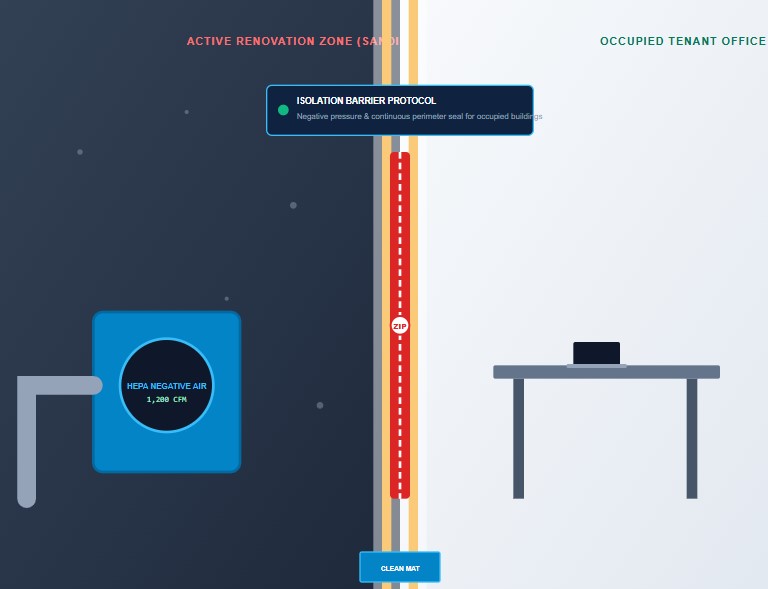
Occupied buildings need dust barriers, floor protection, negative air where required and quiet-hours scheduling. We set these controls up before cutting or sanding begins and clean at the end of every shift.
Common Renovation Problems and How a Commercial Drywall Contractor Solves Them
| Problem found | Risk if ignored | Our solution |
|---|---|---|
| Suspected asbestos in old finishes | Health risk, stop-work order | Request survey, wait for clearance and abatement |
| Out-of-plumb or uneven walls | Visible waves, poor finish | Straighten, shim or furr out before boarding |
| Water stains or soft board | Mould, repeat failure | Fix the leak, dry the area, replace damaged board |
| Unclear fire-rated walls | Failed inspection | Confirm rating, rebuild to the listed assembly |
| Drawings differ from site | Cut-offs, rework | Field measure and issue an RFI early |
| Tenants working next door | Complaints, delays | Dust barriers and off-hours scheduling |
Pre-Start Checklist for Building Owners and General Contractors
Before releasing floors for demolition and framing, confirm that these six milestones are documented:
- Hazardous materials survey received and areas cleared
- Existing rated walls and shafts marked
- Leaks repaired and substrates dry
- Site measured and drawings updated
- Access, hours and elevator bookings confirmed
- Dust and noise plan agreed
What to Ask Your Commercial Drywall Contractor
Before awarding a renovation package, ask:
- Do you inspect and measure the site before pricing?
- How do you handle suspected hazardous materials?
- How do you match existing fire-rated assemblies?
- How will you protect occupied areas from dust and noise?
- Are your WorkSafeBC clearance and insurance current?
A confident, specific answer shows deep commercial renovation experience.
Local Experience You Can Verify
Planning works only when it reflects real conditions. Paragon Drywall Ltd. is a woman-owned commercial drywall subcontractor serving Vancouver, the Lower Mainland and the Fraser Valley. Our leadership brings over 50 years of family and trade experience in the drywall installation and repair business.
We work on commercial and multi-residential drywall projects, including extensive tenant improvements such as the Alexander College campus renovation in Vancouver (a 40,000 sq ft office-to-institutional conversion delivered on schedule without disrupting adjacent tenancies) and high-density builds at Station Square in Burnaby. Our company maintains active WorkSafeBC clearance in good standing, COR safety compliance, and $5,000,000 in commercial general liability insurance.
Direct Renovation Planning Action
Start Your Renovation With a Commercial Drywall Contractor Who Checks First
Planning a renovation and need a commercial drywall contractor who finds problems before they cost you? Request a commercial drywall quote and share your drawings, timeline and building rules. We will review the site conditions and give you a clear plan for your Vancouver project.
Frequently Asked Questions
What should a commercial drywall contractor check before a renovation?
A commercial drywall contractor should check for hazardous materials, existing wall condition, moisture, fire-rated assemblies, services and as-built dimensions, building access rules, and dust and noise controls. Each issue found should have a written solution before work starts.
Do I need an asbestos survey before drywall work in an older Vancouver building?
Older buildings may contain asbestos in plaster, joint compound and ceiling texture. Owners are expected to identify hazardous materials before renovation work under WorkSafeBC requirements. Ask your consultant for the survey, and confirm cleared areas before drywall crews begin.
Can existing fire-rated walls be changed during a commercial renovation?
Yes, but they must keep their fire rating. The wall should be rebuilt to a listed assembly, and all penetrations sealed with approved firestop. Confirm requirements with your consultant and the local building authority before altering rated walls.
How do you fix uneven walls before installing new drywall?
Contractors straighten bowed framing, shim or furr out low areas, or remove failing surfaces so the new board sits flat. Doing this before boarding prevents visible waves, especially under gloss paint or strong lighting.
How is drywall work managed in an occupied commercial building?
Crews install dust barriers, protect floors, schedule noisy work outside business hours and clean daily. Landlord rules for elevators, loading zones and hours are confirmed with the general contractor and building manager before mobilizing.
Does Paragon Drywall serve areas outside Vancouver?
Yes. Paragon Drywall Ltd. Company serves commercial and multi-residential projects across the Lower Mainland and the Fraser Valley, including Burnaby, Surrey, Langley, Richmond, and North Vancouver.