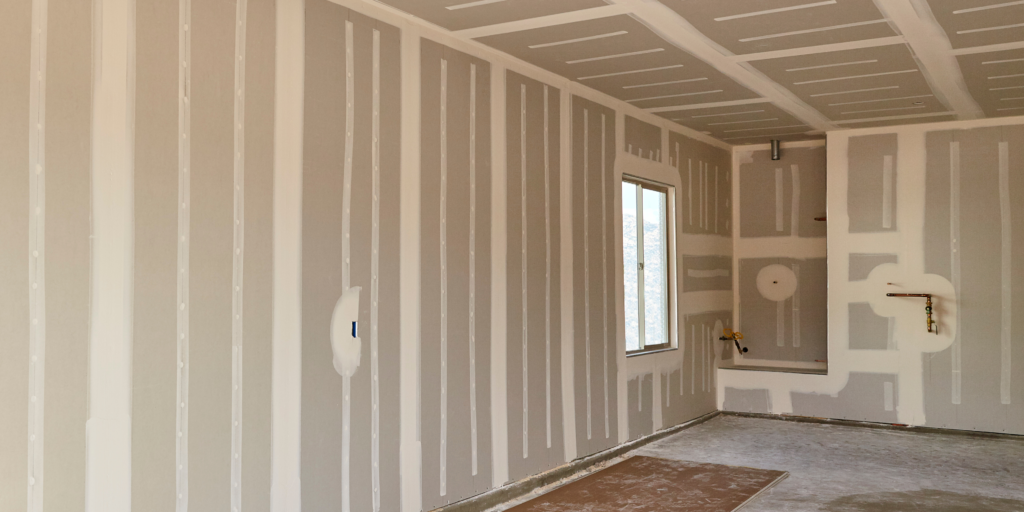
When you walk into a room and it looks fine, you might assume everything is perfect but often, the first signs of damage to interior walls are subtle. For property owners in the Vancouver and Lower Mainland area, noticing and acting on those early signs can save both money and time.
If you’re looking for trusted drywall services, you can request a free quote with our team. At Pristine Drywall we handle everything from drywall repairs and finishing to textured ceiling removal and full installation.
In this article we will cover:
- Key signs your drywall needs repair
- Why you shouldn’t ignore those signs
- What you can check yourself before calling in the pros
- How we approach repair and installation in the Vancouver market
- When to DIY and when to call in experts
Why drywall issues matter
Drywall acts as the visible, finished surface of many modern interiors. While it gives a clean look and is cost-efficient, it is vulnerable to moisture, structural movement, impact, and age. Delaying attention to drywall problems can lead to major issues down the road.
Ignoring drywall problems might lead to:
- Larger damaged areas higher repair cost
- Hidden mould or rot behind the surface
- Reduced insulation or acoustic performance
- The need for more disruptive renovation later
- In commercial spaces, extended downtime or cost overruns
Because we offer full-service drywall installation & finishing see our Services page, we frequently see repair jobs that should’ve been handled earlier. Addressing issues early often means a simpler patch rather than full board replacement.
1. Visible cracks, holes or dents
One of the clearest indicators that your drywall needs attention is physical damage. Cracks around doors and windows, small holes or indentations from impact are often more than just cosmetic.
What to look for:
- Hairline cracks that keep re-appearing after being patched.
- Diagonal or zig-zag cracks, especially in corners or above doors — these may hint at structural movement.
- Nail or screw pops — raised or bulging fasteners in the drywall surface.
- Dents or strike marks where the board may have lost integrity.
Why this matters:
Left unchecked, what begins as a tiny crack can become a large fissure. Where cracks occur around joints, doors or windows, they may be symptomatic of building movement or settling. A patch job may temporarily cover the issue, but unless the underlying cause is addressed, the damage will usually re-emerge.
2. Water‐damage, stains or soft/sagging spots
Moisture is a major enemy of drywall. A leak in a plumbing line, roof or window flashing may allow water into the wall cavity, weakening the board, producing stains or causing sagging.
Tell-tale signs:
- Yellow or brown stains on the wall or ceiling.
- Bubbling, peeling or blistering paint or drywall compound.
- Areas of board that feel soft when you gently press them.
- Sagging ceilings or bowed walls where the board has lost strength.
Why you shouldn’t wait:
Moisture damage often hides behind the surface. What appears to be a stain may be rot or mould developing inside the wall cavity. Insulation behind the board may get wet, fasteners may pull out, and the board may begin to collapse. Early detection makes a large difference in cost and disruption.
What to check:
- Trace the source is it a roof leak, plumbing line, window penetration or condensation issue?
- If the board feels soft or spongy, consider it compromised and in need of removal.
- Inspect attic or ceiling spaces for moisture accumulation.
- Watch for musty scents or visible mould growth.
3. Uneven surfaces, bulges or texture mismatch
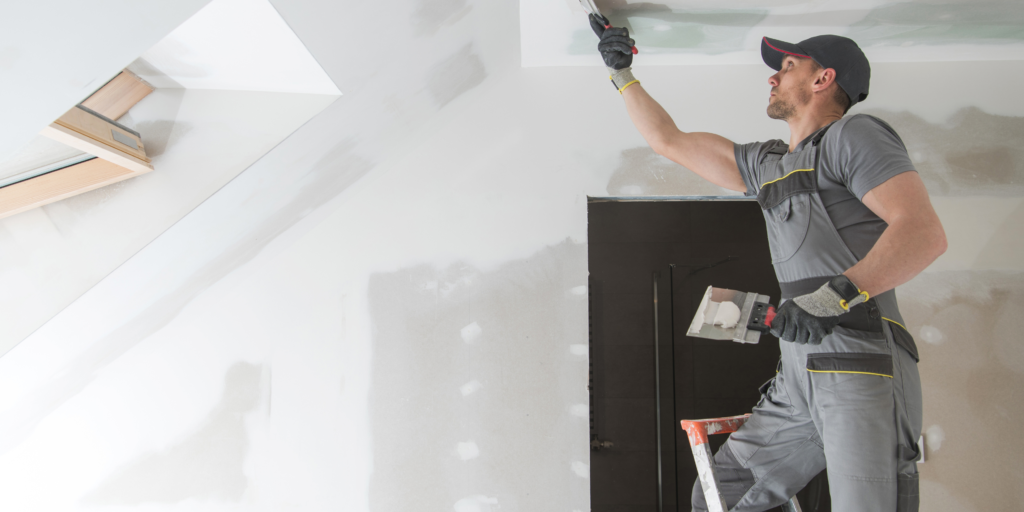
Even if your drywall has no obvious cracks or stains, the surface may be telling a story of its own. Unevenness, bulging or mismatched textures around repaired areas mean something below the surface isn’t stable.
Common clues:
- A wall that looks “wavy” when hit by light at a shallow angle.
- Tape seams that show through paint or have visible ridges.
- Patches where texture doesn’t quite match the original finish. (We specialise in texture matching for this very reason.)
- Ceilings that appear bowed or are no longer flush with adjoining walls, especially after older installations or renovations.
Why address it:
A non-flat or mismatched finish may simply compromise the aesthetic of a space, but it can also reflect underlying movement or improper installation. If framing has shifted or the board was poorly fastened, the result will always be visible. A good repair doesn’t just cover the damage — it restores the surface to stability and uniformity.
4. Repairs that don’t hold
You may have already patched or repaired drywall in the past. The question is: did it last? If you’re seeing the same cracks or nail pops show up again and again, there’s a deeper issue.
Red flags:
- Nail or screw heads that pop out repeatedly.
- Cracks that keep reopening, even after patching and repainting.
- Paint that cracks at the same location around a joint or wall change.
- Previous repair patches that seem weaker or visibly different.
What this indicates:
When patches don’t hold, the repair was likely only superficial. The root cause of structural movement, board fatigue, moisture behind the surface—may not have been properly addressed. It’s a signal to bring in a professional rather than keep applying cosmetic fixes.
5. Age, wear and outdated finishes
Sometimes, damage doesn’t happen overnight—it accumulates gradually. Older homes often have textured finishes like popcorn ceilings, older board that doesn’t hold fasteners as well, or multiple patches and repair zones that degrade over time.
Things to watch for:
- Popcorn ceilings or heavy stipple finishes that are cracking or shedding.
- Walls with multiple patches, mismatched textures or many repair seams.
- Board edges that are chipping or corners that are rounding off.
- Spaces where the acoustic or thermal performance seems poor (old drywall often contributes to those issues).
Why it matters:
When walls and ceilings are patched repeatedly over years, or you’re dealing with outdated board and finishes, it sometimes makes more sense to replace the drywall entirely. At Pristine Drywall we often suggest full replacement when doing major renovations so you’ll finish with a durable, consistent surface rather than keep chasing patch after patch.
6. Special considerations: textured ceilings, popcorn removal & commercial contexts
If you live in an older house or manage a commercial space, you may face unique drywall challenges: outdated textures (popcorn ceilings), plaster over drywall, large open commercial ceilings, acoustic demands, etc.
Look out for:
- Popcorn ceiling particles falling or dislodging, or a ceiling surface that looks dusty or discoloured.
- Plaster areas separating from underlying board or drywall in older constructions.
- Commercial ceilings with high foot-traffic, impact zones, or where repairs need to match large spans seamlessly.
- Texture matching issues where a repair stands out rather than blending in we provide this as part of our textured ceiling installation and repair service.
Because textured surfaces often hide imperfections, damage sometimes goes unnoticed until it’s advanced. Having a regular review of ceiling surfaces, especially textured ones, helps avoid surprises.
Choosing repair or full replacement
When a contractor walks into your space, they’ll typically propose either a repair patch, sand, paint or full board replacement remove, reinstall, finish. How do you decide?
Repair is appropriate when:
- Damage is localised
- Moisture source has been fixed
- The wall framing is stable and the board is still structurally sound
- Texture and finish can be matched without obvious transitions
Replacement makes sense when:
- Large areas of board are sagging, soft or showing signs of rot
- Moisture damage has compromised the board core or insulation behind it
- The finish is outdated (popcorn ceilings) or there is heavy prior patchwork with mismatched textures
- There are structural or framing issues compromising the drywall’s integrity
Industry professionals confirm that once board is soft, crumbling or exhibits wide cracking, replacement is the more durable long-term solution rather than repeatedly patching. Drywall Systems: Signs You Need To Replace Drywall
At Pristine Drywall we often recommend full replacement when the project involves broader renovations. That way you end up with a clean, uniform surface that wears well and looks great.
Our process in the Vancouver / Lower Mainland area
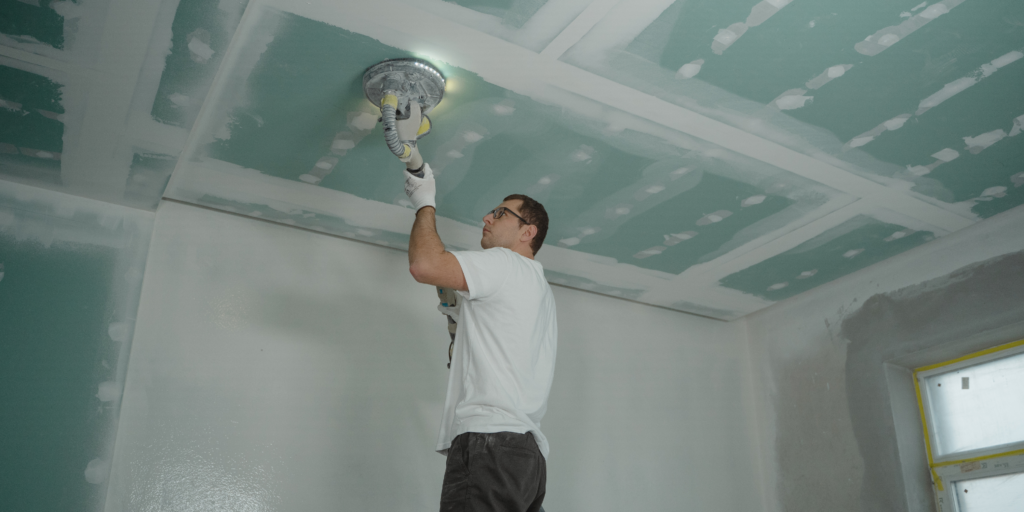
Here’s how we at Pristine Drywall approach a typical repair or installation job for clients in the Vancouver region:
- Inspection & Assessment
- We evaluate the damaged area, check for moisture, structural issues or hidden damage
- We recommend whether repair or replacement makes sense
- Damage Removal or Stabilisation
- If moisture compromised board, we remove the bad section and any damp insulation behind it
- For simple patches we clean and prepare the surface thoroughly
- Board Replacement or Patch Work
- Hanging new drywall as needed, ensuring correct thickness and fastening
- Repairing existing board when suitable
- Joint Taping & Finishing
- Seamlessly taping joints so they’re concealed after painting or texturing
- Applying multiple compound layers with sanding in between; finishing with flat or textured surfaces
- Texture Matching / Final Surface
- If a textured ceiling or wall exists, we match it carefully so the repair blends, not stands out
- Ensuring the final surface is crisp, level and ready for final finishing
- Quality Check & Sign-off
- We inspect for flatness, correct texture, finishing detail
- We leave the area clean and ready for whatever finishes the client chooses
- Customer Satisfaction
- We believe good service is as much about communication and reliability as it is about craftsmanship — our clients in Vancouver consistently appreciate our efficient timelines and quality finish.
We serve the full Lower Mainland including Burnaby, Surrey, Richmond, Coquitlam and surrounding areas our locations page
What you can do right now
You don’t need to wait for major damage. Use this homeowner checklist now:
- Walk through each room with a flashlight held horizontally near the surface; shallow light helps reveal wall flaws
- Inspect ceilings for stains, texture separation or sagging
- Gently press areas that look suspect to test for softness
- Look into attics or service spaces for signs of new or old leaks
- If you notice recurring cracks or nail pops, note the date and size
- When planning to repaint or re-texture, consider resolving underlying drywall condition rather than simply concealing it
- If you have popcorn ceilings installed before the 1990s, it’s worth asking about removal (aesthetic + potential asbestos risk)
If anything looks off, reach out for a free consultation. At Pristine Drywall we’ll evaluate your drywall, recommend the smartest approach and provide a transparent quote.
When DIY is okay and when to call a pro
You might DIY when:
- The damage is small, isolated and no signs of moisture or structural issues
- You’re comfortable sanding, patching, finishing
- The texture is minimal or easy to match
Call a pro when:
- The damage is large, spans a ceiling or involves structural or moisture issues
- You have complex textures (popcorn ceilings, heavy patterns)
- You’re managing a commercial space where finish, timing and disruption matter
While DIY can work for some minor repairs, bigger issues often require professional tools, expertise and result in a better long-lasting outcome.
Final thoughts
Drywall may seem like a simple finish, but it plays a key role in your interior’s performance and look. When you spot cracks, stains, sagging or texture issues, take them seriously. Early attention can prevent major renovation later.
If you’ve noticed any of the signs visible damage, water stains, bulging ceilings, recurring fixes, or simply the age of your finishes speaking for themselves now is the moment to act. Let the team at Pristine Drywall assess whether a repair or full replacement is the right call for your space.
We specialise in drywall repairs, installations, finishing, textured ceiling work and more throughout the Vancouver and Lower Mainland region. Request your free consultation today and let’s get your walls and ceilings back to pristine condition.